This is a really good read, long, but worth it, please take the time and read it. I did not write this, and I give credit to the author just below. I just knew I had to post it after I read it.
From Matt Bracken:
In response to recent articles in mainstream military journals discussing the use of the U.S. Army to quell insurrections on American soil,
I offer an alternate vision of the future. Instead of a small town in
the South as the flash point, picture instead a score of U.S. cities in
the thrall of riots greater than those experienced in Los Angeles in
1965 (Watts), multiple cities in 1968 (MLK assassination), and Los Angeles again in 1992 (Rodney King). New Yorkers can imagine the 1977 blackout looting or the 1991 Crown Heights disturbance.
In fact, the proximate spark of the next round of major riots in
America could be any from a long list cribbed from our history.
We have seen them all before, and we shall see them all again
as history rhymes along regardless of the century or the generation of
humankind nominally in control of events. But the next time we are
visited by widespread, large-scale urban riots, a dangerous new
escalation may be triggered by a fresh vulnerability: It’s estimated
that the average American home has less than two weeks of food on hand.
In poor minority areas, it may be much less. What if a cascading economic crisis, even a temporary one, leads to millions of EBT (electronic benefit transfer)
cards flashing nothing but ERROR? This could also be the result of
deliberate sabotage by hackers, or other technical system failures.
Alternatively, the government might pump endless digits into the cards
in a hopeless attempt to outpace future hyperinflation. The government
can order the supermarkets to honor the cards, and it can even set price
controls, but history’s verdict is clear: If suppliers are paid only
with worthless scrip or blinking digits, the food will stop.
STEP ONE: FLASH MOB LOOTING
In my scenario, the initial riots begin spontaneously across affected urban areas, as SNAP (supplemental nutrition assistance program)
and other government welfare recipients learn that their EBT cards no
longer function. This sudden revelation will cause widespread anger,
which will quickly lead to the flash-mob looting of local supermarkets
and other businesses. The media will initially portray these “food
riots” as at least partly justifiable. Sadly, millions of Americans have
been made largely, or even entirely, dependent on government wealth
transfer payments to put food on their tables.
A new social contract has been created, where bread and
circuses buy a measure of peace in our minority-populated urban zones.
In the era of ubiquitous big-screen cable television, the Internet and
smart phones, the circus part of the equation is never in doubt as long
as the electricity flows. But the bread is highly problematic. Food must
be delivered the old-fashioned way: physically. Any disruption in the
normal functioning of the EBT system will lead to food riots with a
speed that is astonishing. This will inevitably happen when our
unsustainable, debt-fueled binge party finally stops, and the music is
over. Now that the delivery of free or heavily subsidized food is
perceived by tens of millions of Americans to be a basic human right,
the cutoff of “their” food money will cause an immediate explosion of
rage. When the hunger begins to bite, supermarkets, shops and
restaurants will be looted, and initially the media will not condemn the
looting. Unfortunately, this initial violence will only be the start of
a dangerous escalation.
The ransacked supermarkets, convenience stores, ATMs and gas
stations will not be restocked during this period due to the precarious
security situation. A single truck loaded with food or gasoline would be
perceived to be a Fort Knox on wheels and subject to immediate attack
unless heavily protected by powerfully armed security forces, but such
forces will not be available during this chaotic period. Under those
conditions, resupply to the urban areas cannot and will not take place.
The downward spiral of social and economic dysfunction will therefore
both accelerate and spread from city to city. These delays, in turn,
will lead to more riots with the constant underlying demand that hungry
people be fed, one way or another.
Catch-22, anyone? When these demands do not bring the desired
outcome, the participants will ratchet up the violence, hoping to force
action by the feckless state and national governments.
The “food riots” will be a grass-roots movement of the moment
born out of hunger and desperation. It will not be dependent upon
leaders or an underlying organization, although they could certainly add
to the sauce. Existing cell phone technology provides all the
organization a flash mob needs. Most of the mobs will consist of
minority urban youths, termed MUYs in the rest of this essay. Which
minority doesn’t matter; each urban locale will come with its own unique
multi-ethnic dynamic.
Some locales will divide upon religious or political lines,
but they will not be the dominant factors contributing to conflict. In
the American context, the divisions will primarily have an ethnic or
racial context, largely because that makes it easy to sort out the sides
at a safe distance. No need to check religious or political affiliation
at a hundred yards when The Other is of a different color.
We Americans are all about doing things the easy way, so,
sadly, visible racial and ethnic features will form the predominant
lines of division.
Would that it were not so, but reality is reality, even when it’s is a bitch.
Especially then.
NEXT STEP: FLASH MOB RIOTS
In order to highlight their grievances and escalate their
demands for an immediate resumption of government benefits, the MUY
flash mobs will next move their activities to the borders of their
ethnic enclaves. They will concentrate on major intersections and
highway interchanges where non-MUY suburban commuters must make daily
passage to and from what forms of employment still exist. People making a
living will still be using those roads to get to where they earn their
daily bread.
The results of these clashes will frequently resemble the
intersection of Florence and Normandie during the Rodney King riots in
1992, where Reginald Denny was pulled out of his truck’s cab and beaten
nearly to death with a cinder block. If you don’t remember it, watch it on Youtube.
Then imagine that scene with the mob-making accelerant of texting and
other social media technology added to stoke the fires. Instead of a few
dozen thugs terrorizing the ambushed intersections, in minutes there
will be hundreds.
Rioters will throw debris such as shopping carts and trash
cans into the intersection, causing the more timid drivers to pause. The
mobs will swarm the lines of trapped cars once they have stopped.
Traffic will be forced into gridlock for blocks in all directions.
Drivers and passengers of the wrong ethnic persuasions will be pulled
from their vehicles to be beaten, robbed, and in some cases raped and/or
killed. It will be hyper-violent and overtly racial mob behavior, on a
massive and undeniable basis.
Some of those trapped in their cars will try to drive out of
the area, inevitably knocking down MUY pedestrians and being trapped by
even more outraged MUYs. The commuters will be dragged out of their cars
and kicked or beaten to death. Other suburban commuters will try to
shoot their way out of the lines of stopped cars, and they will meet the
same grim fate once they run out of bullets and room to escape.
The mob will be armed with everything from knives, clubs and
pistols to AK-47s. A bloodbath will result. These unlucky drivers and
their passengers will suffer horribly, and some of their deaths will be
captured on traffic web cameras. Later, these terrible scenes will be
released or leaked by sympathetic government insiders and shown by the
alternative media, which continue to expand as the traditional media
become increasingly irrelevant.
Implausible, you insist?
This grim tableau is my analysis of age-old human behavior
patterns, adding flash mobs and 2012 levels of racial anger to the old
recipe. Early-teenage MUYs today are frequently playing “The Knockout Game”
on full bellies, just for kicks, and proudly uploading the videos. They
and their older peers can be expected to do far worse when hunger and
the fear of starvation enter their physical, mental, and emotional
equations. The blame for their hunger will be turned outward against the
greater society, and will be vented at first hand against any non-MUY
who falls into their grasp while they are in the thrall of mob hysteria.
These episodes of mass psychology we will refer to as “flash mob
riots”, “wilding”, or some other new name.
THE OFFICIAL POLICE RESPONSE TO FLASH MOB RIOTS
To gear up for even a single “Florence and Normandie on
steroids” flash mob street riot, city police departments will require an
hour or longer to stage their SWAT teams and riot squads in position to
react. Ordinary patrol cars in small numbers will not venture anywhere
near such roiling masses of hysterical rioters, not even to perform
rescues. Those citizens trapped in their cars cannot expect timely
assistance from local or state authorities.
Even in the first days of widespread riots, when the police
forces are well rested, it might take several hours to mount a response
sufficient to quell the disturbance and restore order to even one major
street intersection riot. In the meantime, scores of innocent commuters
will have been attacked, with many of them injured or killed and left at
the scene. It will be a law enforcement nightmare to quell the
disturbance, mop up lingering rioters, restore security, and bring
medical attention to the living and get medical examiners to the dead.
And each jurisdiction will face potentially dozens of such scenes,
thanks to the ability for MUYs to cross-communicate at will using their
wireless devices.
The far more difficult challenge for the police is that by
the time they are suited in riot gear, armed and geared up to sweep the
intersection, it will probably be empty of rioters. The police, with
their major riot squad reaction times measured in hours, will be
fighting flash mobs that materialize, cause mayhem, and evaporate in
only fractions of hours. This rapid cycle time is a clear lesson taken
from massive riots by immigrant French Muslim MUYs in their own religious enclaves and bordering areas.
The American flash mob riot will exist almost entirely inside the law enforcement OODA (observe, orient, decide, act)
loop. In other words, the rioters will have a much quicker reaction
time than the police. Until fairly recently, superior police
communications meant that they could use their radio networks as a force multiplier.
With their networking advantage and cohesive reactions both within a
department and among cooperating local agencies, police could act as
shepherds guiding or dispersing a wayward stampeding flock.
Today, the mob has the greater advantage, immediately
spreading word of every police preparation by text and Tweet, even in
advance of the police movement. Attempts by the authorities to stop the
flash mobs by blocking and jamming wireless transmissions will have
limited success.
It is at this point that the situation spirals out of control.
The enraged mobs in urban America will soon recognize that
their spontaneous street riots cannot be stopped by the police, and then
they will grow truly fearsome. For the police, it will be a losing game
of Whack-a-Mole, with riots breaking out and dispersing at a speed they
cannot hope to match. The violence will spread to previously unaffected
cities as an awareness of law enforcement impotence is spread by
television and social media. After a few days, the police forces will be
exhausted and demoralized. As the violence intensifies and spreads, and
in the absence of any viable security arrangements, supermarkets and
other stores will not be restocked, leaving the MUYs even more desperate
and angry than before. The increasing desperation born of worsening
hunger will refuel the escalating spiral of violence.
Nor will violent conflict be only between the inhabitants of
the urban areas and the suburbs. The international record of conflict in
tri-ethnic cities is grim, making the old bi-racial dichotomy formerly
seen in America seem stable by comparison. In tri-ethnic cities the
perceived balance of power is constantly shifting, with each side in
turn feeling outnumbered and out muscled. Temporary truces, betrayals and
new alliances follow in rapid succession, removing any lingering sense
of social cohesion.
The former Yugoslavia, with its Catholic, Orthodox and Muslim divisions, comes starkly to mind.
The Lebanese Civil War between the Christians, Sunnis, Shiites and
Druze raged across Beirut (at one time known as “The Paris of the Middle
East”) for fifteen brutal years.
Once a city turns on itself and becomes a runaway engine of
self-destruction, it can be difficult to impossible to switch off the
process and return to normal pre-conflict life. It’s not inconceivable
that the United States could produce a dozen Sarajevos or Beiruts,
primarily across racial instead of religious divides.
Vehicle traffic by non-minority suburban commuters through
adjoining minority areas will virtually halt, wrecking what is left of
the local economy. Businesses will not open because employees will not
be able to travel to work safely. Businesses in minority areas, needless
to say, will be looted. “Gentrified” enclaves of affluent suburbanites
within or near the urban zones will suffer repeated attacks, until their
inhabitants flee.
Radically disaffected minorities will hold critical
infrastructure corridors through their areas hostage against the greater
society. Highways, railroad tracks, pipe and power lines will all be
under constant threat, or may be cut in planned or unplanned acts of
raging against “the system.” As long as security in the urban areas
cannot be restored, these corridors will be under threat. Even airports
will not be immune. Many of them have been absorbed into urban areas,
and aircraft will come under sporadic fire while taking off and landing.
In the absence of fresh targets of value blundering into
their areas, and still out of food, MUYs will begin to forage beyond
their desolated home neighborhoods and into suburban borderlands. “Safe”
supermarkets and other stores will be robbed in brazen commando-like
gang attacks. Carjackings and home invasions will proliferate madly. As I
have discussed in my essay “The Civil War Two Cube,”
so-called “transitional” and mixed-ethnic areas will suffer the worst
violence. These neighborhoods will become utterly chaotic killing zones,
with little or no help coming from the overstretched police, who will
be trying to rest up for their next shift on riot squad duty, if they
have not already deserted their posts to take care of their own
families.
THE SUBURBAN ARMED VIGILANTE RESPONSE
In the absence of an effective official police response to
the exploding levels of violence, suburbanites will first hastily form
self-defense forces to guard their neighborhoods—especially ones located
near ethnic borders. These ubiquitous neighborhood armed defense teams
will often have a deep and talented bench from which to select members,
and they will not lack for volunteers.
Since 9-11, hundreds of thousands of young men (and more than
a few women) have acquired graduate-level educations in various aspects
of urban warfare. In the Middle East these troops were frequently
tasked with restoring order to urban areas exploding in internecine
strife. Today these former military men and women understand better than
anyone the life-or-death difference between being armed and organized
versus unarmed and disorganized.
Hundreds of thousands if not millions of veterans currently
own rifles strikingly similar to those they carried in the armed forces,
lacking only the full-automatic selector switch. Their brothers,
sisters, parents, friends, and neighbors who did not serve in the
military are often just as familiar with the weapons, if not the
tactics. Today the AR-pattern rifle (the semi-automatic civilian version
of the familiar full-auto-capable M-16 or M-4) is the most popular
model of rifle in America, with millions sold in the past decade.
Virtually all of them produced in the past decade have abandoned the old
M-16′s signature “carrying handle” rear iron sight for a standardized
sight mounting rail, meaning that virtually every AR sold today can be
easily equipped with an efficient optical sight. Firing the
high-velocity 5.56×45 mm cartridge and mounted with a four-power
tactical sight, a typical AR rifle can shoot two-inch groups at one
hundred yards when fired from a steady bench rest. That translates to
shooting eight- to ten-inch groups at four hundred yards.
Four hundred yards is a long walk. Pace it off on a straight
road, and observe how tiny somebody appears at that distance. Yet a
typical AR rifle, like those currently owned by millions of American
citizens, can hit a man-sized target at that range very easily, given a
stable firing platform and a moderate level of shooting ability.
And there are a far greater number of scoped bolt-action
hunting rifles in private hands in the United States. Keep this number
in mind: based on deer stamps sold, approximately twenty million
Americans venture into the woods every fall armed with such rifles,
fully intending to shoot and kill a two-hundred-pound mammal. Millions
of these scoped bolt-action deer rifles are quite capable of hitting a
man-sized target at ranges out to and even beyond a thousand yards, or
nearly three-fifths of a mile. In that context, the 500-yard effective
range of the average semi-auto AR-pattern rifle is not at all
remarkable.
So, we have millions of men and women with military training,
owning rifles similar to the ones they used in combat operations
overseas from Vietnam to Afghanistan. Many of these Soldiers and Marines
have special operations training. They are former warriors with
experience at conducting irregular warfare and counter-terrorism
operations in dangerous urban environments. They are the opposite of
unthinking robots: their greatest military talent is looking outside the
box for new solutions. They always seek to “over-match” their enemies,
using their own advantages as force multipliers while diminishing or
concealing their weaknesses. These military veterans are also ready,
willing and able to pass on their experience and training to interested
students in their civilian circles.
Let’s return to our hypothetical Florence and Normandie
intersection, but this time with hundreds of rioters per city block,
instead of mere dozens. Among the mobs are thugs armed with pistols and
perhaps even AK-47s equipped with standard iron sights, and except in
rare cases, these rifles have never been “zeroed in” on a target range.
In other words, past a medium distance of fifty to a hundred yards,
these MUY shooters will have little idea where their fired bullets will
strike—nor will they care. Typically, most of the rioters armed with a
pistol, shotgun or an iron-sighted rifle could not hit a mailbox at a
hundred yards unless by luck. Inside that distance, any non-MUY could be
at immediate risk of brutal death at the hands of an enraged mob, but
beyond that range, the mob will pose much less danger.
Taking this imbalance in effective ranges of the firearms
most likely to be available to both sides, certain tactical responses
are sure to arise, and ranking near the top will be the one described
next.
THE SNIPER AMBUSH: THE NEW TACTIC OF CHOICE
The sniper ambush will predictably be used as a counter to
rampaging mobs armed only with short- to medium-range weapons. This
extremely deadly trick was developed by our war fighters in Iraq and
Afghanistan, taking advantage of the significant effective range and
firepower of our scoped 5.56mm rifles. Tactics such as the sniper ambush
may not be seen early in the civil disorder, but they will surely arise
after a steady progression of atrocities attributed to rampaging MUYs.
Street intersection flash mob riots will not be the only type
of violence exploding during periods of civil disorder. As mentioned
earlier, the number and ferocity of home invasions will skyrocket, and
they will be very hard to defend against. Neighborhood self-defense
forces will be able to protect a group of homes if they are located on
cul-de-sacs or in defensible subdivisions with limited entrances,
turning them overnight into fortified gated communities. Individual
homes and apartment buildings located in open grid-pattern neighborhoods
with outside access from many directions will be much more difficult to
defend, and the home invasions will continue.
Carjacking and other forms of armed robbery will proliferate
to previously unimagined levels, leading to a total loss of confidence
in the government’s ability to provide security across all social lines.
Stray bullets striking pedestrians or penetrating houses will take a
frightening toll, even in areas previously considered to be safe. The
police will be exhausted by constant riot-squad duty, and will not even
respond to reports of mere individual acts of violent criminality. They
will simply be overwhelmed, and will be forced to triage their
responses. The wealthy, powerful and politically well-connected will
demand the lion’s share of remaining police resources, further
diminishing the safety of average Americans.
In that context, neighborhood self-defense forces will form
the nucleus of the armed vigilante direct action groups which will
spring up next in the progression. Suburban anger will continue to build
against the MUYs, who are perceived to be the originators of the home
invasions and gang-level armed looting raids. Survivors of street
ambushes, carjackings and home invasions will tell blood-curdling tales
and show horrific scars.
The neighborhood defense teams will evolve into proactive
suburban armed vigilante groups (SAVs) out of a desire to preemptively
take the violence to their perceived enemies, instead of passively
waiting for the next home invasion or carjacking. The SAV teams will
consist of the more aggressive and gung-ho members of the self-defense
forces, who met and compared notes. Often they will be young men with
recent combat experience in the armed forces, who will apply their
military training to the new situation. Major intersections and highway
interchanges where ambush riots have previously occurred will be among
the SAV targets. The SAV reaction times will be measured in minutes,
compared to the hours required by major police department SWAT teams and
riot squads.
A SAMPLE SNIPER AMBUSH SCENARIO
When word is received that a flash mob is forming at one of
their pre-reconnoitered intersections or highway interchanges, the SAV
team will assemble. Sometimes cooperating police will pass tactical
intel to their civilian friends on the outside. Some clever individuals
will have exploited their technical know-how and military experience to
build real-time intel collection tools, such as private UAVs.
Police will have access to urban security camera footage showing MUYs
moving barricade materials into position—a normal prerequisite to a
flash mob riot intended to stop traffic. Tip-offs to the vigilantes will
be common, and where the networks are still functioning, citizens may
still be able to access some video feeds. Sometimes, police will even
join the SAV teams, incognito and off-duty, blurring the teams into
so-called “death squads.”
The operation I will describe (and it’s only one of dozens
that will be tried) uses two ordinary pickup trucks and eight fighters.
Two riflemen are lying prone in the back of each truck, facing rearward,
with removable canvas covers concealing their presence. Their
semi-automatic, scoped rifles are supported at their front ends on
bipods for very accurate shooting. A row of protective sandbags a foot
high is between them and the raised tailgate.
In the cab are a driver and a spotter in the passenger seat
who also serves as the vehicle’s 360-degree security. The two trucks
don’t ever appear on the same stretch of road, but coordinate their
movements using one-word brevity codes over small FRS walkie-talkie radios.
Each truck has a series of predetermined elevated locations where the
intersection in question will lie between 200 and 500 yards away. Each
truck is totally nondescript and forgettable, the only detail perhaps
being the non-MUY ethnicity of the suburbanite driver and spotter
driving relatively near to a riot in progress.
By the time the two SAV pickup trucks arrive at their firing
positions on different streets and oriented ninety degrees to one
another, the flash mob riot is in full swing. A hundred or more of the
rampaging youths are posturing and throwing debris into traffic in order
to intimidate some cars into stopping. The riflemen in the backs of the
pickups are waiting for this moment and know what to expect, trusting
their spotters and drivers to give them a good firing lane. The spotters
in each truck issue a code word on their radios when they are in final
position. The tailgates are swung down, and the leader among the
riflemen initiates the firing. All-around security is provided by the
driver and spotter.
Lying prone and using their bipods for support, the shooters
have five to ten degrees of pan or traverse across the entire
intersection. Individual rioters are clearly visible in the shooters’
magnified optical scopes. Each of the four snipers has a plan to shoot
from the outside of the mob toward the middle, driving participants into
a panicked mass. The left-side shooters start on the left side and work
to the middle, engaging targets with rapid fire, about one aimed shot
per two seconds. Since the two trucks are set at ninety degrees to one
another, very complete coverage will be obtained, even among and between
the stopped vehicles.
The result is a turkey shoot. One magazine of thirty aimed
shots per rifle is expended in under a minute, a coded cease-fire is
called on the walkie-talkies, and the trucks drive away at the speed
limit. The canvas covering the truck beds contains the shooters’ spent
brass. If the trucks are attacked from medium or close range, the canvas
can be thrown back and the two snipers with their semi-automatic rifles
or carbines will add their firepower to that of the driver and spotter.
Back at the intersection, complete panic breaks out among the
rioters as a great number of bullets have landed in human flesh. Over a
score have been killed outright, and many more scream in pain for
medical attention they will not receive in time. The sniper ambush stops
the flash mob cold in its tracks as the uninjured flee in terror,
leaving their erstwhile comrades back on the ground bleeding. The
commuters trapped in their vehicles may have an opportunity to escape.
This type of sniper ambush and a hundred variations on the
theme will finally accomplish what the police could not: put an end to
mobs of violent rioters making the cities through-streets and highways
impassible killing zones. Would-be rioters will soon understand it to be
suicidal to cluster in easily visible groups and engage in mob
violence, as the immediate response could come at any time in the form
of aimed fire from hundreds of yards away. Even one rifleman with a
scoped semi-auto can break up a medium-sized riot.
Many citizens will take to carrying rifles and carbines in
their vehicles, along with their pistols, so that if their cars are
trapped in an ambush they will have a chance to fight their way out. If
their vehicle is stopped outside the immediate area of the flash mob,
they will be able to direct accurate fire at the rioters from a few
hundred yards away. Inside the fatal hundred-yard radius, unlucky
suburbanite drivers and passengers pulled from their cars will still be
brutally violated, but the occurrences of large mob-driven street
ambushes will be much less frequent once long-range retaliation becomes a
frequent expectation.
THE GOVERNMENT RESPONSE TO VIGILANTISM
Where they will be unable to respond swiftly or effectively
to the outbreaks of street riots by MUY flash mobs, the police and
federal agents will respond vigorously to the deadly but smaller
vigilante attacks. These sniper ambushes and other SAV attacks will be
called acts of domestic terrorism and mass murder by government
officials and the mainstream media. A nearly seamless web of urban and
suburban street cameras will reveal some of the SAV teams by their
vehicles, facial recognition programs, and other technical means. Some
early arrests will be made, but the vigilantes will adapt to increasing
law enforcement pressure against them by becoming cleverer about their
camouflage, most often using stolen cars and false uniforms and masks
during their direct-action missions. Observe Mexico today for ideas on
how this type of dirty war is fought.
Eventually, the U.S. Army itself might be called upon to put
out all the social firestorms in our cities, restore order and security,
pacify the angry masses, feed the starving millions, get vital
infrastructure operating again, and do it all at once in a dozen
American Beiruts, Sarajevos and Mogadishus.
Good luck to them, I say.
A few hundred “Active IRA” tied down thousands of British
troops in one corner of a small island for decades. The same ratios have
served the Taliban well over the past decade while fighting against the
combined might of NATO. Set aside for a moment the angry starving
millions trapped in the urban areas, and the dire security issues
arising thereof. Just to consider the official reaction to vigilantism
separately, it’s unlikely that any conceivable combinations of local and
state police, federal law enforcement, National Guard or active-duty
Army actions could neutralize or eliminate tens of thousands of former
special operations troops intent on providing their own form of
security. Millions of Americans are already far better armed and trained
than a few hundred IRA or Taliban ever were. And the police and Army
would not be operating from secure fire bases, their families living in
total safety thousands of miles away in a secure rear area. In this
scenario, there is no rear area, and every family member, anywhere,
would be at perpetual risk of reprisal actions by any of the warring
sides.
In this hyper-dangerous environment, new laws forbidding the
carrying of firearms in vehicles would be ignored as the illegitimate
diktat of dictatorship, just when the Second Amendment is needed more
than ever. Police or military conducting searches for firearms at
checkpoints would themselves become targets of vigilante snipers.
Serving on anti-firearms duty would be seen as nothing but pure treason
by millions of Americans who took the oath to defend the Constitution,
including the Bill of Rights. Politicians who did not act in the
security interest of their local constituents as a result of political
correctness or other reasons would also be targeted.
A festering race war with police and the military in the
middle taking fire from both sides could last for many years, turning
many American cities into a living hell. Remember history: when the
British Army landed in Northern Ireland in 1969, they were greeted with flowers and applause from the Catholics.
The Tommys were welcomed as peacekeepers who would protect them from
Protestant violence. That soon changed. Likewise with our tragic misadventure in Lebanon back in 1982 and 1983.
Well-intended referees often find themselves taking fire from all
sides. It’s as predictable as tomorrow’s sunrise. Why would it be any
different when the U.S. Army is sent to Los Angeles, Chicago or
Philadelphia to break apart warring ethnic factions?
For a long time after these events, it will be impossible for
the warring ethnic groups to live together or even to mingle
peacefully. Too much rage and hatred will have been built up on all
sides of our many American multi-ethnic fault lines. The new wounds will
be raw and painful for many years to come, as they were in the South
for long after the Civil War. The fracturing of the urban areas, divided
by no-man’s-lands, will also hinder economic redevelopment for many
years because the critical infrastructure corridors will remain
insecure.
Eventually, high concrete “Peace Walls” like those in
Belfast, Northern Ireland, will be installed where the different ethnic
groups live in close proximity. That is, if recovery to sane and
civilized norms of behavior are ever regained in our lifetimes and we
don’t slide into a new Dark Age, a stern and permanent tyranny,
warlordism, anarchy, or any other dire outcome.
Dark Ages can last for centuries, after sinking civilizations
in a vicious, downward vortex. “When the music’s over, turn out the
lights,” to quote Jim Morrison of The Doors. Sometimes the lights stay
out for a long time. Sometimes civilization itself is lost. Millions of
EBT cards flashing zeroes might be the signal event of a terrible
transformation.
It is a frightening thing to crystallize the possible
outbreak of mass starvation and racial warfare into words, so that the
mind is forced to confront agonizingly painful scenarios. It is much
easier to avert one’s eyes and mind from the ugliness with politically
correct Kumbaya bromides. In this grim essay, I am describing a brutal
situation of ethnic civil war not differing much from the worst scenes
from recent history in Rwanda, South Africa, Mexico, Bosnia, Iraq, and
many other places that have experienced varying types and degrees of
societal collapse. We all deplore the conditions that might drive us
toward such a hellish outcome, and we should work unceasingly to return
America to the path of true brotherhood, peace and prosperity. Race
hustlers of every stripe should be condemned.
Most of us wish we could turn back the calendar to Norman
Rockwell’s America. But we cannot, for that America is water long over
the dam and gone from our sight, if not from our memories. John Adams
said, “Our Constitution was made only for a moral and religious people.
It is wholly inadequate to the government of any other.” If that is
true, judging by current and even accelerating cultural shifts, we might
already have passed the point of no return.
The prudent American will trim his sails accordingly.
Monday, October 1, 2012

Sunday, September 30, 2012
Backpack Survival
There's a lot of confusion about what survival means.
To some, it's getting through the aftermath of an airplane wreck in a desolate area. It can mean knowing when to avoid walking in radioactive wastes. Or, it can mean knowing how to barter with troops in the aftermath of riots, war, and looting.
To others, survival has to do with avoiding danger and knowing how to deal with it when it breaks into your home in the dead of night.
Survival ideas abound and there are as many definitions and strategies as there are survivalists. Some have good ideas for survival and some have unsound tactics. Bad ideas can mean extra work or trouble in everyday life; bad ideas during a survival situation get you killed. On-the-job training doesn't work when you're dealing with poison and gunfights.
Or survival.
One of the most dangerous ideas--as far as I'm concerned--is that of "backpack survival."
A "back-pack survivalist" is a survivalist that plans on leaving his home ahead of a disaster and taking to the woods with only what he can carry out with him. He plans to survive through a strategy that is a sort of cross between the Boy-Scout-in-the-woods and Robinson Crusoe.
The backpack survival- ist plans on outrunning danger with a four-wheel drive or a motorcycle and hopes to travel light with a survival kit of everything he might need to cope with the unexpected. He hasn't cached anything in the area he's headed for because, chances are, he doesn't know where he's headed. Somehow, he hopes to overcome all odds with a minimum of supplies and a maximum of smarts.
Certainly it is a noble cause; but it seems like one destined to failure. And that's not survival.
(Let's back up a minute. Backpack fever--or bug-outosis--does makes sense when you're facing a localized disaster like a derailed train with overturned poisonous gas cars. A a potential nuclear meltdown, an impending hurricane, or similar disasters where there is a safe place to run to. During such a time, it makes perfect sense to retreat and come back when things settle down.
Likewise, some people have to work in dangerous areas. For them, donning a backpack and heading for a retreat that they've prepared before hand is a viable survival strategy. These people aren't backpack survivalists.)
Let me make a confession. Yes, I once was a closet backpack survivalist. I had an ALICE pack and had it packed with all I could carry. As I learned more about how to survive, I realized I needed to carry more. Soon I discover- ed that, just for my family to survive for a very few days, I'd need a pack mule and/ora hernia operation...
Something was very wrong.
Probably most survivalists start out the same way. Things are bad so let's bug out. Backpack survivalism is an effort to deal with the possibility of a major disaster.
As backpack survivalists, we make elaborate plans centered around the idea of "bugging out" of the area we live in.
We hope to travel to an area that is safer than the one we're in and plan on living off the land or on somesurvival supplies we've hidden in the area. On the home front, we carefully prepare a stock of supplies that we can quickly cart off in a car or van when things start to look bad.
As more and more plans are made and as ever more survival gear is purchased, the survivalist realizes just how much he needs to cope with in order to survive. If he is any sort of realist, he soon amasses enough gear to warrant a truck or--more likely--a moving van just for carrying thesurvival equipment . (And don't laugh, there are survivalists who have large trucks for just such use.)
Some brave souls continue to make more elaborate plans and some of these survivalists may be able to pull off their plans. Those who have really thought things out and have spared no expenses may manage to survive with a bug-out strategy. But I think there are more logical--and less expensive--ways to survive a large crisis.
Forget all your preconceived notions for a minute.
Imagine that there is a national emergency and you are an outside observ- er? What happens if a nuclear attack is eminent, an economic collapse has occurred, or a dictator has taken over and is ready to round up all malcontents (with survivalists at the top of the list)?
Situations change with time. The survivalist movement--and backpack fever--first started up when gas guzzler cars were about all that anyone drove. That meant that a survivalist with some spare gasoline could outdis- tance his unprepared peers and get to a retreat that was far from the maddening crowd, as it were. (Read some of Mel Tappan's early writing on survival retreats. His ideas are good but many have been undone with the new, fuel-ef- ficient cars.)
With cars getting 30 or even 40 miles per gallon, it isn't rare for a car to be able to travel half way across a state on less than a tank of gasoline. The exodus from cities or trouble spots will be more limited by traffic snarls than lack of gasoline even if the gas stations are completely devoid of their liquid fuel.
Too, there are a lot of people thinking about what to do if the time for fleeing comes. A lot of people will be headed for the same spots. (Don't laugh that off, either. In my area, every eighth person has confided his secret retreat spot to me. And about half of them are all headed for the same spot: an old missile silo devoid of water and food. I suspect that the battle at the gates of the old missile base will rival the Little Big Horn.)
No matter how out-of-the-way their destination, most survivalists are kidding themselves if they think others won't be headed for their hideaway spot along with them. There are few places in the US which aren't accessible to anyone with a little driving skill and a good map.
Too, there are few places which aren't in grave danger during a nuclear war or national social unrest.
Though most nuclear war survival books can give you a nice little map showing likely targets, they don't tell you some essential information. Like what the purpose of the attack will be. The enemy may not be aiming for military targets that day; a blackmail threat might begin by hitting the heart of the farmland or a number of cities before demanding the surrender of the country being attacked. The target areas on the maps might be quite safe.
And the maps show where the missiles land IF they all enjoy 100 percent accuracy and reliability. Anyone know of such conditions in war? With Soviet machinery!? Targets may be relatively safe places to be in.
Added to this is the fact that some areas can be heavily contaminated or completely free of contamination depending on the wind directions in the upper atmosphere. Crystal ball in your survival gear?
But let's ignore all the facts thus far for a few moments and assume that a backpack survivalist has found an ideal retreat and is planning to go there in the event of a national disaster... What next?
His first concern should be that he'll have a hard time taking the supplies he needs with him. A nuclear war might mean that it will be impos- sible to grow food for at least a year and foraging is out as well since animals and plants may be contaminated extensively.
An economic collapse wouldn't be much better. It might discourage the raising of crops; no money, no sales except for the barter to keep a small farm family going.
With large corporations doing much of our farming these days, it is not unreasonable to expect a major famine coming on the heals of an economic collapse. Raising food would be a good way to attract starving looters from miles around.
Ever try to pack a year's supply of food for a family into a small van or car? There isn't much room left over. But the backpack survivalist needs more than just food.
If he lives in a cold climate (or thinks there might be something to the nuclear winter theory) then he'll need some heavy clothing.
Rifles, medicine, ammunition, tools, and other supplies will also increase what he'll need to be taking or which he'll have to hide away at his retreat site.
Shelter? Building a place to live (in any style other than early-American caveman) takes time. If he builds a cabin beforehand, he may find it vandalized or occupied when he gets to his retreat; if he doesn't build it before- hand, he may have to live in his vehicle or a primitive shelter of some sort.
Thus, a major problem is to get a large enough vehicle to carry everything he needs as well as to live in.
History has shown that cities empty themselves without official evacuation orders when things look bad. It happened in WW II and has even happened in the US during approaching hurricanes, large urban fires, and nuclear reactor problems.
So there's a major problem of timing which the backpack survivalist must contend with. He has to be packed and ready to go with all members of his family at the precise moment he learns of the disaster! The warning he gets that warrants evacuating an area will have to be acted on quickly if he's to get out ahead of the major traffic snarls that will quickly develop. A spouse at work or shopping or kids across town at school means he'll either have to leave them behind or be trapped in the area he's in. A choice not worth having to make.
Unless he's got a hot-line from the White House, the backpack survivalist will not hear the bad news much ahead of everyone else. If he doesn't act immediately, he'll be trapped out on the road and get a first-hand idea of what grid-lock is like if he's in an urban area. Even out on the open road, far away from a city, an interstate can become hectic following a ballgame... Imagine what it would be like if everyone were driving for their lives, some cars were running out of fuel (and the occupants trying to stop someone for a ride), and the traffic laws were being totally ignored while the highway patrol tried to escape along with everyone else. Just trying to get off or on major highways might become impossible. If things bog down, how long can the backpack survivalist keep those around from helping to unload his truck-load of supplies that they'll be in bad need of?
Telling them they should have prepared ahead of time won't get many sympathetic words.
Even on lightly-traveled roadways, how safe would it be to drive around in a vehicle loaded with supplies? Our backpack survivalist will need to defend himself.
But let's suppose that he's thought all this out. He has a large van, had the supplies loaded in it, managed to round every member of his family up beforehand, somehow got out of his area ahead of the mob, is armed to the teeth, and doesn't need to take an interstate route.
When he reaches his destination, his troubles are far from over.
The gridlock and traffic snarls won't stop everyone. People will slowly be coming out of heavily populated areas and most of them will have few supplies.
They will have weapons (guns are one of the first things people grab in a crisis according to civil defense studies) and the evacuees will be desperate. How many pitched battles will the survivalist's family be able to endure? How much work--or even sleep--can he get when he's constantly on the lookout to repel those who may be trying to get a share of his supplies?
This assumes that he gets to where he's going ahead of everyone else. He might not though. If he has to travel for long, he may discover squatters on his land or find that some local person has staked out his retreat area for their own. There won't be any law to help out; what happens next? Since (according to military strategists) our backpack survivalist needs about three times as many people to take an area as to defend it, he will need to have some numbers with him and expect to suffer some casualties. Does that sound like a good way to survive?
What about the local people that don't try to take over his retreat before he gets there? Will they be glad to see another stranger move into the area to tax their limited supplies? Or will they be setting up roadblocks to turn people like the backpack survivalist away?
But let's just imagine that somehow he's discovered a place that doesn't have a local population and where those fleeing cities aren't able to get to. What happens when he gets to his retreat? How good does he need to be at hunting and fishing? One reason mankind went into farming was that hunting and fishing don't supply enough food for a very large population nor do they work during times of drought or climatic disruption. What does he do when he runs out of ammunition or game? What happens if the streams become so contaminated that he can't safely eat what he catches? Can he stake out a large enough area to guarantee that he won't depleat it of game so that the next year is not barren of animals?
Farming? Unless he finds some unclaimed farm machinery and a handy storage tank of gasoline at his retreat, he'll hardly get off first base. Even primitive crop production requires a plow and work animals (or a lot of manpower) to pull the blade. No plow, no food for him or domestic animals.
And domestic animals don't grow on trees. Again, unless he just happens to find some cows waiting for him at his retreat, he'll be out of luck. (No one has packaged freeze-dried cows or chickens--at least, not in a form you can reconstitute into living things).
Intensive gardening? Maybe. But even that takes a lot of special tools, seeds, know-how, and good weather. Can he carry what he needs and have all the skills that can be developed only through experience?
Even if he did, he might not have any food to eat. Pestilence goes hand in hand with disasters. Our modern age has forgotten this. But during a time when chemical factories aren't churning out the insecticides and pest poisons we've come to rely on, our backpack survivalist should be prepared for waves of insects flooding into any garden he may create. How good is he at making insecticides? Even if he carries out a large quantity of chemicals to his retreat, how many growing seasons will they last?
Did he truck out a lot of gasoline and an electrical generator with him? No? Do you REALLY think he can create an alcohol still from scratch in the middle of no-where without tools or grain? Then he'd better write off communications, lighting, and all the niceties of the 20th Century after his year's supply of batteries wear out and his vehicle's supply of gasoline conks out.
I'm afraid we've only scratched the surface though.
Thus far things have been going pretty well. What happens when things get really bad? How good is he at removing his spouse's appendix--without electric lights, pain killers, or antiseptic conditions? Campfire dental work, anyone?
How good is he at making ammunition? Clothing? Shoes?
I think you'll have to agree that this hardly seems like survival in style. Even if our backpack survivalist is able to live in the most spartan of conditions and has the know-how to create plenty out of the few scraps around him, he'll never have much of a life ahead of him.
Camping out is fun for a few days. Living in rags like a hunted animal doesn't sound like an existence to be aimed for.
The bottom line with backpack fever is that, with any major disaster that isn't extremely localized, running is a panic reaction not a survival strategy. Running scared is seldom a good survival technique and backpack fever during any but a localized disaster (like a flood or chemical spill) looks like it would be a terminal disease with few, rare exceptions.
So what's the alternative?
A number of writers, from Kurt Saxon to Howard Ruff, have already suggested it but I think that it bears a retelling.
What they've said is this: get yourself situated in a small community that could get by without outside help if things came unglued nationally or internationally. Find a spot that allows you to live in the life-style you've grown accustomed to (and a community that allows you to carry on your livelihood) but which has the ability to grow its own food and protect its people from the unprepared (or looters) that might drift in from surrounding cities during a crisis. This spot has the ability to carry on trade within its borders and has a number of people who can supply specialized products or professional skills.
An area with two thousand to five thousand people in it along with a surrounding farm community would be ideal but sizes can vary a lot according to the climate and city. Ideally such a town would have its own power plant with a few small industries along with the usual smattering of doctors, dentists, and other professionals.
This type of community isn't rare in the US. It's quite common in almost every state. You could probably even take a little risk and commute into a city if you must keep your current job. (In such a case a reverse backpack survival strategy just might work--you'd be bugging out to your home.)
Western civilization stepped out of the dark ages when small communities started allowing people to specialize in various jobs. Rather than each many being his own artisan, farmer, doctor, carpenter, etc., men started learning to master one job they enjoyed doing. Each man become more efficient at doing a job and--through the magic of capitalism--western culture finally started upward again.
A small modern community like the one suggested above, when faced with a national economic collapse or the aftermath of a nuclear war, would eventually lift itself up the same way. It would give those who lived in it the same chance for specialization of work and the ability to carry on mutual trade, support, and protection. Such small communities will be the few light spots in a Neo-Dark Age.
Which place would you rather be: in a cave, wondering where the food for tomorrow would come from, or with a group of people living in their homes, working together to overcome their problems? Even the most individualistic of survivalists shouldn't find the choice too hard to make.
The author of this article, Duncan Long, is well-known as the writer of many gun, self-sufficiency, and survival books. His firearms books are listed (along with other interesting books) in a free catalog available from Paladin Press, P. O. Box 1307, Boulder, CO 80306 (303) 443-7250.
-----------------------------------------------------------------------------------------------------
Click here for all your prepping/tactical needs: The Tactical Patriot Store
-----------------------------------------------------------------------------------------------------
To some, it's getting through the aftermath of an airplane wreck in a desolate area. It can mean knowing when to avoid walking in radioactive wastes. Or, it can mean knowing how to barter with troops in the aftermath of riots, war, and looting.
To others, survival has to do with avoiding danger and knowing how to deal with it when it breaks into your home in the dead of night.
Survival ideas abound and there are as many definitions and strategies as there are survivalists. Some have good ideas for survival and some have unsound tactics. Bad ideas can mean extra work or trouble in everyday life; bad ideas during a survival situation get you killed. On-the-job training doesn't work when you're dealing with poison and gunfights.
Or survival.
One of the most dangerous ideas--as far as I'm concerned--is that of "backpack survival."
A "back-pack survivalist" is a survivalist that plans on leaving his home ahead of a disaster and taking to the woods with only what he can carry out with him. He plans to survive through a strategy that is a sort of cross between the Boy-Scout-in-the-woods and Robinson Crusoe.
The backpack survival- ist plans on outrunning danger with a four-wheel drive or a motorcycle and hopes to travel light with a survival kit of everything he might need to cope with the unexpected. He hasn't cached anything in the area he's headed for because, chances are, he doesn't know where he's headed. Somehow, he hopes to overcome all odds with a minimum of supplies and a maximum of smarts.
Certainly it is a noble cause; but it seems like one destined to failure. And that's not survival.
(Let's back up a minute. Backpack fever--or bug-outosis--does makes sense when you're facing a localized disaster like a derailed train with overturned poisonous gas cars. A a potential nuclear meltdown, an impending hurricane, or similar disasters where there is a safe place to run to. During such a time, it makes perfect sense to retreat and come back when things settle down.
Likewise, some people have to work in dangerous areas. For them, donning a backpack and heading for a retreat that they've prepared before hand is a viable survival strategy. These people aren't backpack survivalists.)
Let me make a confession. Yes, I once was a closet backpack survivalist. I had an ALICE pack and had it packed with all I could carry. As I learned more about how to survive, I realized I needed to carry more. Soon I discover- ed that, just for my family to survive for a very few days, I'd need a pack mule and/or
Something was very wrong.
Probably most survivalists start out the same way. Things are bad so let's bug out. Backpack survivalism is an effort to deal with the possibility of a major disaster.
As backpack survivalists, we make elaborate plans centered around the idea of "bugging out" of the area we live in.
We hope to travel to an area that is safer than the one we're in and plan on living off the land or on some
As more and more plans are made and as ever more survival gear is purchased, the survivalist realizes just how much he needs to cope with in order to survive. If he is any sort of realist, he soon amasses enough gear to warrant a truck or--more likely--a moving van just for carrying the
Some brave souls continue to make more elaborate plans and some of these survivalists may be able to pull off their plans. Those who have really thought things out and have spared no expenses may manage to survive with a bug-out strategy. But I think there are more logical--and less expensive--ways to survive a large crisis.
Forget all your preconceived notions for a minute.
Imagine that there is a national emergency and you are an outside observ- er? What happens if a nuclear attack is eminent, an economic collapse has occurred, or a dictator has taken over and is ready to round up all malcontents (with survivalists at the top of the list)?
Situations change with time. The survivalist movement--and backpack fever--first started up when gas guzzler cars were about all that anyone drove. That meant that a survivalist with some spare gasoline could outdis- tance his unprepared peers and get to a retreat that was far from the maddening crowd, as it were. (Read some of Mel Tappan's early writing on survival retreats. His ideas are good but many have been undone with the new, fuel-ef- ficient cars.)
With cars getting 30 or even 40 miles per gallon, it isn't rare for a car to be able to travel half way across a state on less than a tank of gasoline. The exodus from cities or trouble spots will be more limited by traffic snarls than lack of gasoline even if the gas stations are completely devoid of their liquid fuel.
Too, there are a lot of people thinking about what to do if the time for fleeing comes. A lot of people will be headed for the same spots. (Don't laugh that off, either. In my area, every eighth person has confided his secret retreat spot to me. And about half of them are all headed for the same spot: an old missile silo devoid of water and food. I suspect that the battle at the gates of the old missile base will rival the Little Big Horn.)
No matter how out-of-the-way their destination, most survivalists are kidding themselves if they think others won't be headed for their hideaway spot along with them. There are few places in the US which aren't accessible to anyone with a little driving skill and a good map.
Too, there are few places which aren't in grave danger during a nuclear war or national social unrest.
Though most nuclear war survival books can give you a nice little map showing likely targets, they don't tell you some essential information. Like what the purpose of the attack will be. The enemy may not be aiming for military targets that day; a blackmail threat might begin by hitting the heart of the farmland or a number of cities before demanding the surrender of the country being attacked. The target areas on the maps might be quite safe.
And the maps show where the missiles land IF they all enjoy 100 percent accuracy and reliability. Anyone know of such conditions in war? With Soviet machinery!? Targets may be relatively safe places to be in.
Added to this is the fact that some areas can be heavily contaminated or completely free of contamination depending on the wind directions in the upper atmosphere. Crystal ball in your survival gear?
But let's ignore all the facts thus far for a few moments and assume that a backpack survivalist has found an ideal retreat and is planning to go there in the event of a national disaster... What next?
His first concern should be that he'll have a hard time taking the supplies he needs with him. A nuclear war might mean that it will be impos- sible to grow food for at least a year and foraging is out as well since animals and plants may be contaminated extensively.
An economic collapse wouldn't be much better. It might discourage the raising of crops; no money, no sales except for the barter to keep a small farm family going.
With large corporations doing much of our farming these days, it is not unreasonable to expect a major famine coming on the heals of an economic collapse. Raising food would be a good way to attract starving looters from miles around.
Ever try to pack a year's supply of food for a family into a small van or car? There isn't much room left over. But the backpack survivalist needs more than just food.
If he lives in a cold climate (or thinks there might be something to the nuclear winter theory) then he'll need some heavy clothing.
Rifles, medicine, ammunition, tools, and other supplies will also increase what he'll need to be taking or which he'll have to hide away at his retreat site.
Shelter? Building a place to live (in any style other than early-American caveman) takes time. If he builds a cabin beforehand, he may find it vandalized or occupied when he gets to his retreat; if he doesn't build it before- hand, he may have to live in his vehicle or a primitive shelter of some sort.
Thus, a major problem is to get a large enough vehicle to carry everything he needs as well as to live in.
History has shown that cities empty themselves without official evacuation orders when things look bad. It happened in WW II and has even happened in the US during approaching hurricanes, large urban fires, and nuclear reactor problems.
So there's a major problem of timing which the backpack survivalist must contend with. He has to be packed and ready to go with all members of his family at the precise moment he learns of the disaster! The warning he gets that warrants evacuating an area will have to be acted on quickly if he's to get out ahead of the major traffic snarls that will quickly develop. A spouse at work or shopping or kids across town at school means he'll either have to leave them behind or be trapped in the area he's in. A choice not worth having to make.
Unless he's got a hot-line from the White House, the backpack survivalist will not hear the bad news much ahead of everyone else. If he doesn't act immediately, he'll be trapped out on the road and get a first-hand idea of what grid-lock is like if he's in an urban area. Even out on the open road, far away from a city, an interstate can become hectic following a ballgame... Imagine what it would be like if everyone were driving for their lives, some cars were running out of fuel (and the occupants trying to stop someone for a ride), and the traffic laws were being totally ignored while the highway patrol tried to escape along with everyone else. Just trying to get off or on major highways might become impossible. If things bog down, how long can the backpack survivalist keep those around from helping to unload his truck-load of supplies that they'll be in bad need of?
Telling them they should have prepared ahead of time won't get many sympathetic words.
Even on lightly-traveled roadways, how safe would it be to drive around in a vehicle loaded with supplies? Our backpack survivalist will need to defend himself.
But let's suppose that he's thought all this out. He has a large van, had the supplies loaded in it, managed to round every member of his family up beforehand, somehow got out of his area ahead of the mob, is armed to the teeth, and doesn't need to take an interstate route.
When he reaches his destination, his troubles are far from over.
The gridlock and traffic snarls won't stop everyone. People will slowly be coming out of heavily populated areas and most of them will have few supplies.
They will have weapons (guns are one of the first things people grab in a crisis according to civil defense studies) and the evacuees will be desperate. How many pitched battles will the survivalist's family be able to endure? How much work--or even sleep--can he get when he's constantly on the lookout to repel those who may be trying to get a share of his supplies?
This assumes that he gets to where he's going ahead of everyone else. He might not though. If he has to travel for long, he may discover squatters on his land or find that some local person has staked out his retreat area for their own. There won't be any law to help out; what happens next? Since (according to military strategists) our backpack survivalist needs about three times as many people to take an area as to defend it, he will need to have some numbers with him and expect to suffer some casualties. Does that sound like a good way to survive?
What about the local people that don't try to take over his retreat before he gets there? Will they be glad to see another stranger move into the area to tax their limited supplies? Or will they be setting up roadblocks to turn people like the backpack survivalist away?
But let's just imagine that somehow he's discovered a place that doesn't have a local population and where those fleeing cities aren't able to get to. What happens when he gets to his retreat? How good does he need to be at hunting and fishing? One reason mankind went into farming was that hunting and fishing don't supply enough food for a very large population nor do they work during times of drought or climatic disruption. What does he do when he runs out of ammunition or game? What happens if the streams become so contaminated that he can't safely eat what he catches? Can he stake out a large enough area to guarantee that he won't depleat it of game so that the next year is not barren of animals?
Farming? Unless he finds some unclaimed farm machinery and a handy storage tank of gasoline at his retreat, he'll hardly get off first base. Even primitive crop production requires a plow and work animals (or a lot of manpower) to pull the blade. No plow, no food for him or domestic animals.
And domestic animals don't grow on trees. Again, unless he just happens to find some cows waiting for him at his retreat, he'll be out of luck. (No one has packaged freeze-dried cows or chickens--at least, not in a form you can reconstitute into living things).
Intensive gardening? Maybe. But even that takes a lot of special tools, seeds, know-how, and good weather. Can he carry what he needs and have all the skills that can be developed only through experience?
Even if he did, he might not have any food to eat. Pestilence goes hand in hand with disasters. Our modern age has forgotten this. But during a time when chemical factories aren't churning out the insecticides and pest poisons we've come to rely on, our backpack survivalist should be prepared for waves of insects flooding into any garden he may create. How good is he at making insecticides? Even if he carries out a large quantity of chemicals to his retreat, how many growing seasons will they last?
Did he truck out a lot of gasoline and an electrical generator with him? No? Do you REALLY think he can create an alcohol still from scratch in the middle of no-where without tools or grain? Then he'd better write off communications, lighting, and all the niceties of the 20th Century after his year's supply of batteries wear out and his vehicle's supply of gasoline conks out.
I'm afraid we've only scratched the surface though.
Thus far things have been going pretty well. What happens when things get really bad? How good is he at removing his spouse's appendix--without electric lights, pain killers, or antiseptic conditions? Campfire dental work, anyone?
How good is he at making ammunition? Clothing? Shoes?
I think you'll have to agree that this hardly seems like survival in style. Even if our backpack survivalist is able to live in the most spartan of conditions and has the know-how to create plenty out of the few scraps around him, he'll never have much of a life ahead of him.
Camping out is fun for a few days. Living in rags like a hunted animal doesn't sound like an existence to be aimed for.
The bottom line with backpack fever is that, with any major disaster that isn't extremely localized, running is a panic reaction not a survival strategy. Running scared is seldom a good survival technique and backpack fever during any but a localized disaster (like a flood or chemical spill) looks like it would be a terminal disease with few, rare exceptions.
So what's the alternative?
A number of writers, from Kurt Saxon to Howard Ruff, have already suggested it but I think that it bears a retelling.
What they've said is this: get yourself situated in a small community that could get by without outside help if things came unglued nationally or internationally. Find a spot that allows you to live in the life-style you've grown accustomed to (and a community that allows you to carry on your livelihood) but which has the ability to grow its own food and protect its people from the unprepared (or looters) that might drift in from surrounding cities during a crisis. This spot has the ability to carry on trade within its borders and has a number of people who can supply specialized products or professional skills.
An area with two thousand to five thousand people in it along with a surrounding farm community would be ideal but sizes can vary a lot according to the climate and city. Ideally such a town would have its own power plant with a few small industries along with the usual smattering of doctors, dentists, and other professionals.
This type of community isn't rare in the US. It's quite common in almost every state. You could probably even take a little risk and commute into a city if you must keep your current job. (In such a case a reverse backpack survival strategy just might work--you'd be bugging out to your home.)
Western civilization stepped out of the dark ages when small communities started allowing people to specialize in various jobs. Rather than each many being his own artisan, farmer, doctor, carpenter, etc., men started learning to master one job they enjoyed doing. Each man become more efficient at doing a job and--through the magic of capitalism--western culture finally started upward again.
A small modern community like the one suggested above, when faced with a national economic collapse or the aftermath of a nuclear war, would eventually lift itself up the same way. It would give those who lived in it the same chance for specialization of work and the ability to carry on mutual trade, support, and protection. Such small communities will be the few light spots in a Neo-Dark Age.
Which place would you rather be: in a cave, wondering where the food for tomorrow would come from, or with a group of people living in their homes, working together to overcome their problems? Even the most individualistic of survivalists shouldn't find the choice too hard to make.
The author of this article, Duncan Long, is well-known as the writer of many gun, self-sufficiency, and survival books. His firearms books are listed (along with other interesting books) in a free catalog available from Paladin Press, P. O. Box 1307, Boulder, CO 80306 (303) 443-7250.
-----------------------------------------------------------------------------------------------------
Click here for all your prepping/tactical needs: The Tactical Patriot Store
-----------------------------------------------------------------------------------------------------
Wednesday, September 26, 2012
Founders
Hello patriots, I want to get the word out about a great book, by a great patriot. I would like to do what I can to help this book get on the best sellers list. If that happens more Americans will be exposed to this book, and may have their eyes opened to what is going on in this country.
Order your copy today. It’s BOOK BOMB DAY!
The more orders, the further the price is driven down, and the higher the ratings are driven up!
Founders: A Novel of the Coming Collapse
by James Wesley Rawles

THE WORLD AS WE KNOW IT IS GONE.
It’s the near future, and thanks to a perfect storm of reckless banking practices, hyperinflation, a stock market gone mad, and the negligence of our elected officials, the entire social, political, and economic infrastructure of America has collapsed. Chaos reigns in the streets, medical treatment is no longer available, and a silent coup has placed a dangerous group of men at the helm of a false government. America’s fate is in the hands of those few individuals who have the survival skills, the faith, and the forethought to return this country to the state its founding fathers intended.
Please share this, so we can get the word out.
http://astore.amazon.com/thetactpatr-20/detail/143917282X
Order your copy today. It’s BOOK BOMB DAY!
The more orders, the further the price is driven down, and the higher the ratings are driven up!
Founders: A Novel of the Coming Collapse
by James Wesley Rawles
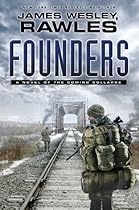
THE WORLD AS WE KNOW IT IS GONE.
It’s the near future, and thanks to a perfect storm of reckless banking practices, hyperinflation, a stock market gone mad, and the negligence of our elected officials, the entire social, political, and economic infrastructure of America has collapsed. Chaos reigns in the streets, medical treatment is no longer available, and a silent coup has placed a dangerous group of men at the helm of a false government. America’s fate is in the hands of those few individuals who have the survival skills, the faith, and the forethought to return this country to the state its founding fathers intended.
Please share this, so we can get the word out.
http://astore.amazon.com/thetactpatr-20/detail/143917282X
Friday, September 21, 2012
Guerrilla Tactics, one way to look at it
The fundamental tactics of Guerrilla warfare are completely different
from that of conventional military warfare, but that doesn't mean that
it is any less effective. In military language, tactics are the
practical methods of achieving the grand strategic objectives - winning
the war.
The tactics of Guerrilla warfare does not require soldiers willing to die in every battle nor does it require that every attack should result in enemy kills. That may sound completely backwards to a conventional soldier, but the success of Guerrilla warfare becomes clear when its characteristics are closely examined.
Guerrilla warfare is a repeated "Hit and Run" style of combat designed to confuse and disrupt enemy operations. The enemy soldier in a zone of operations should not to be allowed to sleep, rest or organize. The enemy should always feel that they are surrounded. Continued disruptions can be very demoralizing to an enemy force. Five or six well-trained guerrilla soldiers can cause enemy units ten times larger to retreat in haste.
Guerrilla Tactics:
Be to effective a guerrilla fighter must have a good knowledge of the surrounding countryside; the paths of entry and escape, the possibilities of speedy maneuver, and good hiding places.
A fundamental characteristic of a guerrilla is mobility. How fast and effectively can teams move from point A to point B and then back again. Which means the effective guerrilla is in top physical shape, and is able to perform long marches, or runs without too much effort.
Guerrillas never engage in frontal head-to-head confrontations against enemy forces.
Guerrilla actions are designed to keep enemy leaders confused so that they must constantly rethink strategies and change plans.
Aggressive actions cannot endure for long, but must be rapid; there must be of a high degree of effectiveness, lasting only a few minutes, and be followed by an immediate withdrawal.
Nighttime attacks can be more aggressive and can be more direct.
Attack and fall back to safety. The enemy believing that the attacker has departed will begin to relax, when suddenly a new attack bursts forth in another place, with the same characteristics, while the main body of the guerrillas lies in wait to intercept reinforcements.
One of the weakest points of the enemy is their transportation line. Guerrilla fighters make it virtually impossible for a military force to maintain a steady transport line: road or railroad. Explosive charges can be planted on bridges or railways to make them impassable.
Guerrillas can directly attack vehicles by lying in wait to ambush them at the moment of passing and annihilating any survivors. These guerrilla tactics forces the enemy to find new transportation routes making it harder to get fresh supplies and reinforcements to their men in the field.
The tactics of Guerrilla warfare does not require soldiers willing to die in every battle nor does it require that every attack should result in enemy kills. That may sound completely backwards to a conventional soldier, but the success of Guerrilla warfare becomes clear when its characteristics are closely examined.
Guerrilla warfare is a repeated "Hit and Run" style of combat designed to confuse and disrupt enemy operations. The enemy soldier in a zone of operations should not to be allowed to sleep, rest or organize. The enemy should always feel that they are surrounded. Continued disruptions can be very demoralizing to an enemy force. Five or six well-trained guerrilla soldiers can cause enemy units ten times larger to retreat in haste.
Guerrilla Tactics:
Be to effective a guerrilla fighter must have a good knowledge of the surrounding countryside; the paths of entry and escape, the possibilities of speedy maneuver, and good hiding places.
A fundamental characteristic of a guerrilla is mobility. How fast and effectively can teams move from point A to point B and then back again. Which means the effective guerrilla is in top physical shape, and is able to perform long marches, or runs without too much effort.
Guerrillas never engage in frontal head-to-head confrontations against enemy forces.
Guerrilla actions are designed to keep enemy leaders confused so that they must constantly rethink strategies and change plans.
Aggressive actions cannot endure for long, but must be rapid; there must be of a high degree of effectiveness, lasting only a few minutes, and be followed by an immediate withdrawal.
Nighttime attacks can be more aggressive and can be more direct.
Attack and fall back to safety. The enemy believing that the attacker has departed will begin to relax, when suddenly a new attack bursts forth in another place, with the same characteristics, while the main body of the guerrillas lies in wait to intercept reinforcements.
One of the weakest points of the enemy is their transportation line. Guerrilla fighters make it virtually impossible for a military force to maintain a steady transport line: road or railroad. Explosive charges can be planted on bridges or railways to make them impassable.
Guerrillas can directly attack vehicles by lying in wait to ambush them at the moment of passing and annihilating any survivors. These guerrilla tactics forces the enemy to find new transportation routes making it harder to get fresh supplies and reinforcements to their men in the field.
Tuesday, September 18, 2012
Counter Ambush Tactics
Are you an accident just waiting to happen by blindly walking into an ambush, or do you take the tactical “high ground” to avoid such an event? Rarely do the “bad guys” announce their intended attack upon you. Rather, they lie in wait to seize the element of surprise. They pounce when you are least aware. A burglar creeping through your house won’t turn on the lights or make unnecessary noise to give you a chance to arm yourself. A mugger won’t stand in the middle of the sidewalk and risk you taking a detour away from the “fatal funnel.” And, you won’t
Most martial arts training start with two opponents facing each other and giving the proper salutations. Western boxers come up to each other before a bout and knock gloves together as a sign of good sportsmanship before the first round. Asian based fighters sharply bow or bring their hands together in a Yin Yang fashion then slip into a combative stance. European Fencers salute one another with their naked blades, as do Filipino Kali practitioners.
Although this practice is very colorful and rich in tradition it can negatively condition fighters who are in it for purely survival reasons. Subconsciously this practice sends a message to the fighter that there is a preparatory period just prior to combat. To many my statement may sound ludicrous, but ANYTHING we do in training can carry over into actual combat. Let me give you a startling example.
In
Using real firearms is also a common practice, but it requires weapon safety checks, and marking the barrel with colored tape. The colored guns makes for an overall safer training environment. However, after repeated use of these colored replicas many officers became so conditioned to the red color that on occasion, actors who played the role of the contactee (the person being stopped by the police) pulled out a red wallet or other red object and suddenly found themselves being “shot.”
Why? because, the officers associated the color red with a threat. It’s for this very reason that many agencies paint their training guns black or silver, or buy products that are already colored similar to that of actual firearms.
Rituals in training, salutations before combative encounters, are very much like the conditioning of the red guns. Although innocent at first, they can lock a person into a potentially dangerous behavioral pattern. In this article we will examine training methods that will prepare you for sudden violent ambushes.
Before the ambush
Throughout my
Whenever you are going up to an ATM machine, inside a bank, airport, or other potential “targets” you should always observe the surroundings as you make your approach. For example, as you walk up to a liquor store you should scan the immediate area for suspicious vehicles. If somebody is in a vehicle nearby the exit with the engine running it could possible be a “getaway car”. Another telltale sign of a crime in progress, or about to occur, is someone “posted” on the inside who is nervously watching the door and parking lot. This person could be a “lookout” for the accomplices inside.
A few years ago, while off duty, my wife and I were about to enter a drug store for some eye infection medication. As we were about to enter through the double doors I noticed a young woman holding the electronic doors open by standing still in the sensor area. At first I thought she was just being polite and holding the doors open for us, but it soon was apparent that she was looking past us and nervously scanning the parking lot. I sensed that something was wrong and grabbed my wife’s arm to pull her back. Just then two men jumped the store guardrails and were about to run right over the top of us. They had just committed a commercial burglary and were making their escape. Without thinking I pushed my wife aside, sidestepped, and purposely tripped the first suspect with a sweep. The case of beers that the suspect was clutching onto tumbled in front end over end of him on the sidewalk as he skidded to a stop on his palms. The second suspect in hot pursuit leaped over his fallen partner in crime like a clumsy hurdle runner, then turned around to “take care” of me. I pulled my concealed pistol from my pancake holster and ordered him to stop. The surprised attacker, dressed in gang attire, decided that dying for a few beers was not worth it, turned and fled, leaving his accomplices. In the commotion the other two scurried off. I was no’t about to stop them without a radio, vest, or back up. Plus, a violent encounter was not worth it for some stolen bottles, and my wife standing next to me. I decided to be a good witness instead.
When approaching, or walking through a potential ambush area, always follow the first tactical rule – Stop, Look, Listen. In my example of the drug store incident, the moment I sensed something “unusual” or “out of place” I stopped, I looked, and I only had a split second to decide what I was going to do when the two men came running at me. Had I not been paying attention as I was walking to the entrance of the store the thieves would have plowed me and my wife over.
Whether you’re in a military unit walking through hostile territory or you are walking through a dark city alley, you should stop, look and listen every few minutes, even if there is no apparent danger. If is quiet, move on. If you hear or see something, prepare yourself.
Stop, Look, Listen exercises
In the Australian military manual, Patrolling and Tracking, Section 5 No. 74 it reads, “Patrol leaders must try to anticipate where contact with the enemy (ambush) is probable. Action to be taken must be planned and rehearsed before the patrol moves out.” In a martial arts training environment you can do a simple exercise that will help you learn to “anticipate” contact with the “enemy.” I call this exercise Walking the Gauntlet. It will develop alertness, mobility, and attack.
Have several participants line up, spread out evenly, on each side of the room facing inward. Place a student (the trainee) in the middle of the two lines and have him or her walk down the center through the two lines. Prior to conducting the exercise the trainee faces the wall as the instructor selects a couple of attackers on each side of the line. Each trainee that will walk through the Gauntlet will receive a different configuration of attackers. The trainee is then told to turn around and walk through the midst of the participants. The trainee, unaware of who was selected for the attack, cautiously moves through the “crowd” until a noise or aggressive movement from one of the selected attackers catches his or her attention. The trainee quickly defends against the sudden attack. After the appropriate action has been taken against the attacker (be it knife defense training, hand-to-hand, etc.), the trainee returns to the place where the attacked had just occurred, and picks up where they left off to walk the rest of the Gauntlet.
I do this exercise often to prepare police officers for walking through agitated crowds, such as parties, labor strikes, bars, etc. Not everyone in a crowd is going to jump you, but you have to be prepared for those few who might. It makes for a very nervous trainee, but it helps them get use to possible ambushes.
Attack the attacker
In an ambush the ambusher has the tactical advantage. Whether it’s a military operation or a crook waiting to jump you, the ambusher will have done their homework prior to the attack; they will have studied the terrain in which you will pass, note the fields of fire and observation, cover, concealment, obstacles, and avenues of approach and withdrawal. Then, when you come walking into the “killing zone” the attack is launched. In the case of an attempted rape, robbery, or other criminal assault the ambush will be what we call a “near ambush.” In other words, the attack is right on top of you, as opposed to a “far ambush” such as a sniper attack. In a near assault the US military teaches its personnel to attack the enemy if caught in an ambush. By doing an immediate action drill, suddenly counterattacking the enemy even under concentrated close-range fire, moves you out of the killing zone, and prevents other ambushers from closing in on you.
Although each incident must be weighed separately, most criminals expect their victims to comply when faced with the threat of violence or with violence itself. Whenever you submit to a criminal you can never know the outcome. You are at the mercy of the criminal. Although fighting back can get you hurt, a sudden violent counterattack may catch the attacker off guard affording you the opportunity to move out of the “killing zone.”
In any ambush the natural instinct is to take cover and save your skin. However, that’s exactly what the enemy is hoping for and picks you off as you cower in a defensive position. For survival, sometimes you must go opposite your instincts and meet the danger head on. As the famous Chinese guerrilla fighter, Mao Tse-tung, once said, “In every apparent disadvantage, some advantage is to be found.”
When I am training correctional personnel how to survive a jail or prison riot, I purposely put them at a disadvantage in order for them to find some advantage. I have an exercise where I simulate a worst-case scenario – a group of hostile inmates have blocked the escape route for the correction staff. The natural tendency is for officers to separate from one another and push directly to the exit or to huddle in a corner and fight defensively. However, these methods are almost always doomed to failure. The proper tactic is to stick together and follow a wall so the inmates cannot come up from behind. In order to have a chance of getting out they have to move together as a group and violently push through. To do the exercise I usually put five officers on one side of a room (fitted with protective gear) and seven “inmates” (also geared up) on the other side of the room blocking the exit. The goal of the exercise is to move as a team and get all five officers past the inmates and out the door. Students learn very quickly that if they do not push for the door and attack the inmates with what the Marines call “violence of action,” they never make it to safety. Of course this exercise can carry over into civilian applications, such as training your family to stick together and push through as a unit.
Think like the crook
Of course, to outsmart an ambusher you have to think like one. When you walk anywhere, especially high-risk areas, you should always ask yourself these questions:
1. Where would someone most likely be hiding?
2. Should an attack occur where are my avenues of escape?
3. What would the best tactics be – counterattack, submit, run?
A good exercise to run, in order to sharpen your reaction skills in sudden ambush situations, is an exercise I named Door number 1, 2 or 3.
Stack cardboard boxes up vertically to create a few “walls” the attacker can hide behind, or hang a few sheets of black painters plastic from the ceiling to the floor. As the trainee makes their way from one end of the room to the other, the attacker lies in wait behind one of the walls. When the trainee comes within range, the attacker, or attackers (it’s good to sometimes have multiple attackers) launch an attack; be it a hold-up, knife attack, a fist fight, or whatever other realistic simulation you can come up with. The trainee will soon learn some valuable lessons in avoiding, or reducing the consequences of an ambush:
1. When turning corners, make wide turns to give more reaction time.
2. Use “noise discipline” (don’t make noise) as you approach a hostile area, so the bad guy can’t hear you coming.
3. Anticipate likely hiding areas that an attacker may take.
Final thoughts
Awareness is the key to avoiding many potentially dangerous situations – such as ambushes. But just talking about it does not train you for an actual event. You must put these principles into practice so that they become “muscle memory” (ingrained reactions). The next time you’re about to spar with your partner, try having them pop out of somewhere and engage you. By doing this you will be better prepared for the real thing.
Thanks for the article, Officer Jim Wagner
http://www.jimwagnertraining.com
Monday, September 17, 2012
Small Unit Training Ideas
TRAINING IDEA - Crossing Obsticles
* Set up a 1-3 mile patrol with your group where you can plan a route that you must:
(1) Cross a river, using several different methods
(2) Cross a highway or roadway, again using several different methods
(3) Cross a bridge. (highway or railroad)
(4) Cross a
(5) Cross a 'open' field area.
(6) Move through an area of dense underbrush or trees
* Practice using a improvised "rope bridge" when crossing the river. Getting yourself & your equipment across should be a challange. A 10'-15' wide river would work best.
* Practice moving your unit across roadways. Use a remote less used road if your less experienced & work your unit up to crossing busier roads.
* Practice crossing bridges. Depending on the A.O., crossing a highway or railroad bridge may be your only choice, but remember that actually crossing a bridge is a last resort. It is too dangerous to do on a regular basis, it acts as a funnel to force you into a certain area where the bad guys can set up an ambush.
* Practice crossing fences. Any type
* Also practice crossing 'open grassy fields'. Find an area where you must crawl on your stomachs for at least 100 yds where ya can't be seen.
Make your FTX's as realistic as possible. Put a level of danger in them. Practice your stealth/movement skills and cross/recon private, posted lands. Do real recon missions on possible future use lands without being detected.
There is a right and a wrong way when crossing obstacles and the wrong way may cost a life. Get out in the field and practice, practice, practice.
Another good thing to practice are open field transitions, and of course CQB. If you are wondering what these are go to you tube and watch some videos on them. I will get into open field transitions in a later post.
Thursday, September 13, 2012
Marksman/Observer Team (Tips)
The marksman/observer team consists of two men, both fully qualified marksmen, or sniper in some cases. If they are a Designated Marksman (DM) team then they will both be qualified DM, if they are a Sniper team, then they will both be qualified snipers.
In order to function effectively, however, one will shoot (the marksman/sniper) while the other watches the objective (the observer/spotter). These two will rotate duties on a regular basis during a engagement. In most cases with sniper teams the observer/spotter is the more experienced member, because he is the one making all the wind, elevation, and other calls to the marksman/sniper, all the sniper has to do is ensure he agrees with the calls from his spotter then make the shot.
From this point on in this post I will be using the term marksman to refer to both a DM, and a sniper, and the term observer to refer to both the observer and the spotter.
Duties and Responsibilities:
Marksman / Observer
1. Writes Operations Order Obtains and prepares any special gear
2. Coordinates with other units Leads in normal movement
3. Leads in stalking movement Follows in stalking movement
4. Follows observer in normal movement Shares in the construction of the "hide"
5. Selects "hide" location Draws sketches and range cards
6. Detects and announces targets Shares range estimates with marksman
7. Adjusts scope for wind, range and angle Identifies targets by priority
8. Shares range estimates with observer Estimates wind
9. Decides engagement priorities Backs up marksman’s shot
10. Engages human and material targets Operates radio
11. Records information
12. Coordinates other teams
13. Operates diversionary devices
Due to liability, police snipers do not rotate weapons. Each marksman/observer should have a rifle assigned exclusively to himself. The marksmen/observers must also rotate/rest/share, or they won’t be able to last during a long-term engagement. Most marksman shots are fired only after all viable options have been expended.
Marksman/Observer Selection
What does one look for in Marksman/Observer candidates? Being a good marksman involves three main skills; – marksmanship (duh), fieldcraft, and tactics. The candidate should have experience, interest, or a demonstrated aptitude within at least one of these areas. Training will round out the other two remaining skills.
Marksmanship
When it comes to marksmanship, the candidate should be at least an expert rifleman. He had better like shooting, because to hone and maintain marksman-level skills he must shoot frequently. The candidate should have an interest in firearms and technical subjects beyond the common layman, a natural curiosity about things like ballistics, bullets, and optics.
Hunting experience is especially useful because the sniper candidate already will have learned the consequences of inaccuracy or sluggish reflexes.
Fieldcraft
Fieldcraft includes skills such as wind estimation, camouflage, and observation. Hunters of elusive game can become excellent marksman, but may not ever have what it takes to become a sniper, there is a huge difference in a DM and a sniper. Bowhunters are also excellent candidates. Sportsman also learn to read the weather, see tracks in a natural setting, understand field maps, observe live game, and move to avoid being seen.
Tactics
An appreciation for tactics can only be developed through their
Sniper Operations:
Overall Mission of the Cover Element
1. Establish an inner perimeter to contain the threat. Containing the threat to one location will hopefully expedite its resolution and prevent additional persons from hindering or becoming involved in the operation.
2. Cover the movement of an entry team. The inner perimeter personnel provide security for the entry team as they move into position for an entry should an entry become necessary.
3. Provide intelligence attained to assist the tactical team in their primary goal of saving lives. While on the perimeter you become the eyes and ears for the tactical team as they conduct their planning elsewhere. Any information regarding the situation, activity, descriptions, etc. should be passed forward to assist in planning and decision making.
4. Eliminate a High Value Target (HVT)
Tactical Considerations of the Cover Element
Equipment:
All items necessary for prolonged operations should be taken into positions upon initial employment. Consider the time and effort spent moving into the area undetected, then having to leave the area to get something which was forgotten. The more movement, the greater the chance of detection.
Radios: –
Ensure extra batteries are available. Also have frequencies and call-signs for all necessary communications during the operation, and are capable of being operated as near to silent as possible
Night observation devices:
–Ideal for some situations. Extra batteries are a priority.
Movement:
Cover and concealment:
The shortest route usually is not the best route. Use terrain and/or existing structures for protection
Avoid detection:
We never know what effect our presence may have on a suspect. If it might have an adverse effect, don’t be seen.
Suspect (enemy) vs. Sector:
Both members of the team must be aware of their priorities when the suspect is in the sights.
Sniper’s responsibility:
The sniper will maintain target acquisition on the greatest threat.
Observer’s responsibility:
The observer will monitor other suspect(s) or hostage(s), movement of the entry team, and the rest of the sector, and be ready to provide fire support himself if the need arises.
Planning and Tactical Setup:
Avenues of Approach
Once the Sniper Teams have been assigned or chosen their position, they must then consider routes that will take them to that location.
The following is a list of those considerations:
1. Avoid moving directly through or on the subjects position
2. Utilize terrain that offers good cover and concealment. Cover is protection from small arms fire. Concealment is protection from subject observation.
3. Use terrain which will allow you movement during the hours of darkness. Try to avoid rocky areas or areas of heavy vegetation.
4. Don’t automatically dismiss difficult terrain. This may be your best choice of approach in terms of cover and concealment, especially during daylight movement.
5. Avoid silhouetting yourself. Stay off skyline and low on rooftops.
6. Avoid areas that may afford the subject a field of fire on you. Such as open, flat areas, (i.e. open fields or playgrounds).
7. Stay within the perimeter. This will prevent contact with locals and the media.
8. Plan an alternate approach in the event that your primary cannot be navigated.
Detection
You need to keep in mind who could be watching you. Two ways that you can be detected are:
a. Direct Observation, and Indirect Observation
b. Direct Observation
In order for the subject to shoot you, they must have an idea of where you are. The subject may have access to binoculars or other sight enhancing items. A telephoto lens on a camera will work well.
Indirect Observation
Television - This might be a media event, so be aware of cameras.
Night Vision - Hope that your adversary does not have access to this technology.
Smell - The subject may detect your odor, so don’t wear cologne.
Sound - Remember that the subject can hear you approaching if your noise discipline is poor.
Concealment and Cover
The best way to avoid detection is by utilizing concealment and cover. There are six factors which will give you protection from subject observation.
They are:
Shape - From any distance your outline will give you away. Change you shape to match that of your surroundings.
Shadow - Stay in the shadows and don’t allow your own to be seen. When it comes to your position, only you and your shadow should know.
Shine (or texture) - Beware of smooth surfaces such as watches, weapon barrel, glasses. Smooth surfaces are areas that reflect light.
Color - Blend in with your surroundings. Bright colors attract unwanted attention.
Position or Setting - When choosing your position, make it appear as though nothing is out of the ordinary.
Movement - Motion naturally attracts the eye. Even a little movement at an inopportune time will warrant attention.
Rules for Day Movement
1. Movement must be slow and well planned.
2. Avoid disturbing animals such as dogs and birds.
3. Take advantage of noise such as wind, rain, or vehicles moving.
4. Cross roads which provide the most cover and/or concealment. Use ditches and wood lines. Attempt to minimize the amount of time you are in the open.
Rules for Night Movement
a. Move by bounds. Stop, listen, then move again.
b. Take advantage of other noises.
c. Avoid running. This causes noise and increases anxiety.
d. Preserve night vision. Don’t look at lights.
e. Avoid silhouetting..
f. Avoid dry brush and tape loose equipment.
Thanks to Bender for some of the information.
Saturday, September 8, 2012
Personal Camouflage and Concealment
Shape.
Your helmet, load bearing web equipment, rifle and other gear have a clear, often square shape, and there are no squares in nature. Break up straight lines with strips of burlap, camo cloth or netting in shades of brown and green. Elastic bands can be sewn to your uniform or equipment straps to facilitate adding camo strips or vegetation. Camo materials should not be attached to your rifle in areas where they may slip and interfere with your firm grip or the mechanical operation of the weapon. It is better to cover the weapon with paint or camouflage tape.
Shine.
Most modern
Other shiny surfaces that can reflect light include binoculars,
Silhouette.
Similar in many respects to shape, silhouette includes the outline of the human form and the equipment it is carrying. The shape of the head and shoulders of a man are unmistakable and a bare helmet attracts attention. The use of local vegetation as garnishing helps break up your silhouette. Thick handfuls of grass tucked into your shoulder straps are especially useful in breaking up the distinctive "head and shoulders" shape of the human figure and vegetation added to a helmet breaks the smooth curve of the top and the line of the brim.
Take care not to overdo adding local vegetation. You shouldn't need a machete to hack a path through your camouflage to get at your ammo pouch or other necessary equipment. Also, a large bush or tree is sure to attract attention when it starts to move.
Silhouette also includes field craft. However well camouflaged you may be, it is little help if you "sky line" yourself by walking along the top of a hill or ridge line, or if you stand against a background of one solid color.
Smell.
Even the most urbanized man will develop a good sense of smell after a few days in the open. He will be able to detect engine smells, cooking, body odors and washing. Some smells are hard to minimize. Soaps should be scent-free and activities such as cooking should be confined to daylight hours when other smells are stronger and the air warmer. Rubbish from cooking should be carried away from your operational area and buried only as a second choice. Buried objects are often dug up by animals and can give a good indication of the strength and composition of your patrol or unit as well as its morale. The discipline of refuse removal is important.
Sound.
You can make a lot of noise while out on patrol. Your boots can squeak. Your cleaning kit or magazines can rattle in your ammo pouches. Heavy pack frames can creak.
Fittings on your weapon can rattle. Radios can have background noise. Coughing and talking can carry for long distances, especially at night. You must become familiar with a silent routine in which hand signals replace the spoken word and conversations are conducted in a whisper.
Proper stowage of your gear, taping of slings and other noisy equipment and a final shakedown before a patrol moves out will reduce noise. If digging a position, place sentries far enough out that they will spot an enemy before he hears the sound of digging.
Color.
Though most modern combat uniforms are in a disruptive pattern camouflage, there may be times when this is less helpful. The trouble with camo clothing is that in the wrong environment, like cities, it stands out and says "Hey, look at me!" If fighting in built-up areas, a pattern of greys, browns and dull reds would be more useful than the typical woodland BDU pattern.
Natural vegetation used to garnish helmets and equipment will fade and change color. Leaves will dry and curl up exposing pale under surfaces. You may have put dark green ferns and leaves into your helmet band while in the woods and then find yourself moving through an area of pale open grassland. Check and change your camouflage regularly.
The most obvious color that needs camouflaging is that of human skin, and for that you need G.I. camo stick or, preferably, a commercial camo cream. G.I. camo sticks are issued in loam and light green for use in areas with green vegetation. A sand and light green stick is used in areas lacking green vegetation. A loam and white stick is for use in snow covered terrain. If camo sticks or creme are not available use burnt cork, bark or charcoal for the dark color and mud for the light color.
Dark colors are used to reduce the highlights formed by the nose, cheek bones, chin, ears and forehead. Lighter colors are used in areas of shadow under the eyes, nose and chin. When applying camo to your face it is useful to work with a buddy and help each other. G.I. camo sticks are rough on the skin and difficult to apply. A few drops of baby oil, skin lotion or insect repellent rubbed on the skin first will make it much easier to apply. Skin camo needs to be periodically touched-up as you move and sweat. A simple pattern for the face is to apply a light color first to the entire face and then add dark diagonal stripes. The diagonals cut though and break up the horizontal and vertical lines of the eyes nose and mouth.
Good camouflage is almost as important as good marksmanship. A well camouflaged man who is a poor shot will probably survive longer than the poorly concealed expert sniper.
Friday, September 7, 2012
This is a must see, and a must share video!
Please watch this and share it, get the word out. It is time people woke up and did something.
Wednesday, September 5, 2012
The Tactical Patriot Online Store
Hey guys and gals, since I have been doing this blog, and my Facebook stuff, I have found that there is a need for good sources of gear and equipment for my fellow patriots. So in response to this need, we have decided to open up an Amazon online store for all of your tactical needs.
We will carry everything from: Chest rigs to Uniforms, Boots to Hats, MOLLE gear to Knives, and every thing we can find to list. This should become your go to source for all things tactical.
Patriots, Oathkeepers, III%ers, Militia, Paintball, Airsoft, Survivalists, and many more will find this store to have what they need. We will constantly be adding new products, so check back often, and please support this patriot owned business.
Thank you for your support.
The Tactical Patriot Store
We will carry everything from: Chest rigs to Uniforms, Boots to Hats, MOLLE gear to Knives, and every thing we can find to list. This should become your go to source for all things tactical.
Patriots, Oathkeepers, III%ers, Militia, Paintball, Airsoft, Survivalists, and many more will find this store to have what they need. We will constantly be adding new products, so check back often, and please support this patriot owned business.
Thank you for your support.
The Tactical Patriot Store
Tuesday, September 4, 2012
Bugging out by vehicle
EVACUATION: Bugging out by motor vehicle
by Team Training Systems
Reprinted from American Survival Guide
by Team Training Systems
Reprinted from American Survival Guide
Most individuals have included "bugging out" in their emergency response planning. This is correct, as evacuation may be necessary for many reasons. Most plans make the assumption that major highways will be open and passable. The individual or group will likely be part of a mass exodus, complete with panicky, desperate drivers, vehicle break- downs, accidents and other traffic-tangling conditions.
The military has priority on the interstate highway system, and the military may close the interstates at any time compounding the confusion. We need only to examine the evacuation prior to Hurricane Opal, where 60 percent of evacuees remained in place due to "grid-locked" highways, to see that an alternate evacuation plan should be developed.
While mass evacuation in the event of a natural disaster or hazardous materials incident is normally a well-planned and practiced event, evacuation in the event of mass civil disobedience is not. The Historical Response to such events has been curfews, travel restrictions and restrictions on the sale of gasoline (Remember the riots of the 1960's?)
The ability to travel by tertiary roads, or no roads at all, will be invaluable under chaotic conditions.
This article is intended to serve as a primer or basic introduction to cross-country evacuation by motor vehicle.We will discuss route find- ing, traversing obstacles, security and communications. Operation will also be discussed.
ROUTE FINDING-
Prior reconnaissance is an absolute must for successful use of territory roads, trails and utility rights-of-way. A large scale atlas, or better, USGs grid maps will prove invaluable and save time. Power line and particularly pipeline rights-of-way are kept reasonably clear of brush for inspection purposes and are frequently the most direct routes available. Be advised that utility rights-of- way are private property, and frequently include steep grades and side- hills that may be impassable for less capable vehicles.
Abandoned railroad lines may offer another usable route. Grades are shallow and curves are wide even by modern highway standard. The road- bed was designed for far heavier loads than any four-wheeled vehicle is capable of moving. The roadbed is packed so tightly that very little vegetation grows. Here in the East, abandoned logging and mining rail- roads are frequently encountered and are usable by even low-capability vehicles. The principal drawback is that bridges over both ravines and water obstacles may be collapsed or removed entirely, creating what may be a near-impassable obstacle. Even so, if an abandoned railroad grade appears on the map, it is worth investigating. Never, except under the most dire and immediate circumstances, attempt to travel on a "live" railroad track. An oncoming train could produce the most horrible consequences!
Even direct cross country travel is not impossible, if the terrain is not too heavily wooded. Most government owned woodland is well covered with maintained fire fighting trails. Open terrain may be crossed on a compass heading, the only drawback being the tracks left by the vehicles.
OPSEC AND CONVOY OPS-
Most individuals and families concerned with emer- gency planning have formed groups with others of like mind. There is safety in numbers, particularly when traveling. Risk exposure is high- est when on the move, and the risk is compounded when only a single vehicle is involved.
The type of vehicle is also a risk factor. While not to belabor the obvious, a standard passenger auto or minivan would be a poor choice. Road bound and with poor hauling capacity, this type's virtues are limited to improved high speed capability and greater fuel economy, when compared to the average four-wheel drive. Consider also that a full size four wheel drive usually has sufficient power to drag almost any man-made obstacle out of the way. Choose accordingly.
The first step in preparing an evacuation plan should be predestination of an initial assembly or "rally" point. This should be a central location for all parties, enroute to the designated area of operations. Ideally a point with a fairly high elevation providing to the degree of cover and concealment should be located. The higher elevation will assist with radio communications, and concealment will be necessary as not all group members will arrive at the same time. Make no on the air reference to road or places names, landmarks, etc., as such radio traffic may assist undesirable elements in locating the group. If the route is over 50 miles or so in length, or passes through several small towns, then intermediate rally points should be designated, using the same criteria as before.
Second, the order of march should be designated. First in line should be the lightest and least capable vehicle, carrying the forward secur- ity element. If the first vehicle crosses obscales unassisted, then the rest of the convoy should cross also. The heaviest and most capa- ble vehicle will proceed second in line, carrying towlines, chain saws, axes and other vehicle recovery and road clearing equipment. In the event of a stuck vehicle or road obstacle the equipment forward security element will be positioned for most rapid deployment. Next in line, in third and fourth position, should be the supply vehicles and non- operational personnel. The trail vehicle should be a near duplicate of the second vehicle and carry equipment to create roadblocks as well as the rear security element. Open trucks would be ideal as the lead and trail vehicles: the security elements, riding in the open cargo area would have maximum visibility and fields of fire.
Third, while on the march, maintain maximum safe interval between vehi- cles. Each vehicle should remain within sight and small-arms range of the vehicles immediately preceding and following. Avoid the tendency to "bunch up", particularly at obstacles or other ambush points. Minimize exposure by maintaining interval at temporary halts.
Fourth, radio communications between vehicles and security elements elements can not be overemphasized. Work out some simple codes so that voice transmissions will be minimized. Keying the mike will produce a spitting sound as the radio breaks squelch. A simple "one" for stop, "two" for go, "staccato burst" for dismount and take cover will suffice for most work. Such short bursts will greatly reduce the effectiveness of direction-finding gear, and will give no clue as to what the group is doing.
Fifth, when making prolonged halts, the vehicles should be "laagered"- dispersed in a rough circle, under cover and/or camouflaged. Two sentries, circling the laager in opposite directions will be sufficient to keep watch on the laager and each other. Maintain light and noise discipline while laagered. Sound travels for long distances in unpopulated areas, and light is visible for many miles, even in daylight. If group plans include an overnight halt, the same criteria for selection should be used as for the initial rally point.
FORDING OPERATIONS-
If road travel is be avoided for security reasons, then bridges over water obstacles are to be doubly avoided. Water crossings have been recognized as natural choke points and ambush sights since armed conflict began. Intentional destruction of bridges has been used to deny mobility since ancient times, and more recently, obsolete bridges on tertiary roads frequently are not replaced when damaged. Fortunately, most of these tertiary roads date from horse and buggy days when the only way to cross water obstacles was to ford them. Note the number of waterside towns with -ford in the names (Chanceford, Chaddsford, etc.) that usually indicate an old creek ford.
Once the fording sight is located, the next step will be determined by the tactical situation. In a high threat environment, the security element will have to proceed on foot and secure both the far bank and both flanks prior to sending the vehicles across. If the perceived threat level is low, one or two lightly armed scouts on the far bank will be sufficient.
The ford element should proceed across at wheel track width, inspecting the bottom of the creek for deep holes, large rocks, mud, or other obstacles. On reaching the opposite bank, the ford element should continue for at least 200 meters under cover and evaluate conditions. If passable, one of the ford element should return to the ford and direct traffic at the ford itself.
Park the heaviest, most capable vehicle nose-on to the creekbank to one side of the ford. Connect the front of the most capable vehicle to the rear of the least capable with a towline and send the least capable vehicle across first. The towline should be long enough to reach across the entire obstacle, if possible. If not the heavy vehicle will have to follow the lighter vehicle across in order to maintain slack in the towline. If the first vehicle does not make it across, the recovery system is in place to pull the vehicle out without having personnel wading in the creek in order to hook up the towline.
In the event that the convoy contains low capacity vehicles such as passenger cars, different procedures are in order. These vehicles are not capable of fording more than a shallow stream, and most likely will have to be towed across. If there is any possibility of submerging the engine, the air intake opening should be sealed and the vehicle towed across (dead). Bear in mind that a passenger car will float in relatively shallow water and that it may be necessary to open the doors and puncture the interior trunk floors to prevent the auto from drifting downstream, pulling the tow vehicle with it. It may even be necessary to use a second vehicle and towline as an anchor on the near bank.
Once across, the first vehicle should stop only long enough to discon- nect the towline, then immediately proceed in the direction of the ford security element. Each vehicle should cross in turn, maintaining inter- val and extending the line. The vehicle operators should not attempt to crash through the obstacle. Proceed slowly and steadily, maintaining control of the vehicle. Use extreme caution when operation in still or muddy water. Depth is hard to determine, and wandering offline could result in a swamped vehicle, or worse. If the water is deep enough to impinge on the radiator fan, the fan belt should be loosened or removed to prevent the fan from revolving. A rotating fan may bend forward far enough to damage the radiator when the fan hits the water.
The anchor vehicle then picks up the rear security element (if deployed) and crosses last. The convoy should immediately proceed to a secure area at least one kilometer away and halt to inspect all undervehicle components for water vehicle contamination. Do not omit this step if the water is more than axle deep. The convoy may return to normal road march after the inspection is completed.
DEBRIEFING NOTES:
Team Training Systems-Creek Fording/Convoy Ops Training
Several of the photographs used in this article were shot on a Team Training Systems training op. We identified several weaknesses needing remediation:
1. Communications. Due to the late arrival of one of the operators, the pre-op briefing was greatly shortened and several operators did not "get the word." Several crossings were required to set up the photo- graphs properly.
2. One vehicle had no two-way radio. Due to the short briefing no hand signals were designated. The operator of this vehicle had no idea of what he was expected to do, other than follow the vehicle in front.
3. Perhaps most important, five large vehicles traveling together on roads that normally see only two or three vehicles per day attracted a tremendous amount of local attention. While no legal authorities were contacted, we found ourselves explaining our presence more than once. This attention would likely be magnified under chaotic conditions. Maintain the largest possible interval between vehicles that reliable communications will allow. Keep weapons and other survival gear out of sight. Camping gear would make a good cover story, as would a large toolbox, hard hats, and a stack of unusual looking electrical parts. Make vehicle halts in parking lots and other public locations.
In conclusion, prior planning, reconnaissance, identification of obstacles, and several dry runs will be necessary to identify and correct problems.
Saturday, September 1, 2012
Defeating Shine
The shine from binoculars, scopes, infrared viewers,
Glint from an officer's binoculars gave away the Confederate attack at Gettysburg, killed the German Army's top sniper in WWII, cost an Israeli general an eye, and allowed a Marine gunnery sergeant to take out the Viet Cong's top sniper.
Visiting paratroopers from the former Soviet Union said recently that looking for reflections from our optics was a major scouting tactic in the Cold War. And during major U.S. Army exercises, at least one scout helicopter is usually assigned the sole mission of looking for optic reflections from ground forces.
You can shield binoculars by cupping your fingers around the outer lenses. But you can't cup your fingers around a weapon scope or around the SWDGs you're wearing or resting on your helmet.
A field expedient solution is to make lens covers from a pair of women's brown nylon pantyhose, preferably a pair with the thicker nylon in the upper part. this technique will give you immediate camouflage for your optics while preserving their normal use. Another technique is to take OD green duct tape, and tape across the lenses, leaving only a 1/4 inch slit with which to look through.
FOR BINOCULARS AND SCOPES:
1. Cut off the ends (toes).
2. Stretch fabric over the lenses.
3. Secure with a rubber band and tape.
FOR THE SWDG LENS:
1. Lay the lens on the thicker nylon.
2. Outline shape with a pen and cut out.
3. Stretch fabric over the lens as you return it to the frame, leaving a little overhang.
4. When lens is back in place, trim excess nylon from inside the goggles.
Reference: INFANTRY magazine, March-April, 1995. SWAP SHOP: OPTICAL CAMOUFLAGE
By Mike Sparks, USARNG, Redford, NC
Subscribe to:
Posts (Atom)